
Foreclosure Defense Options in Southeast Michigan: What to Try Before You File Bankruptcy
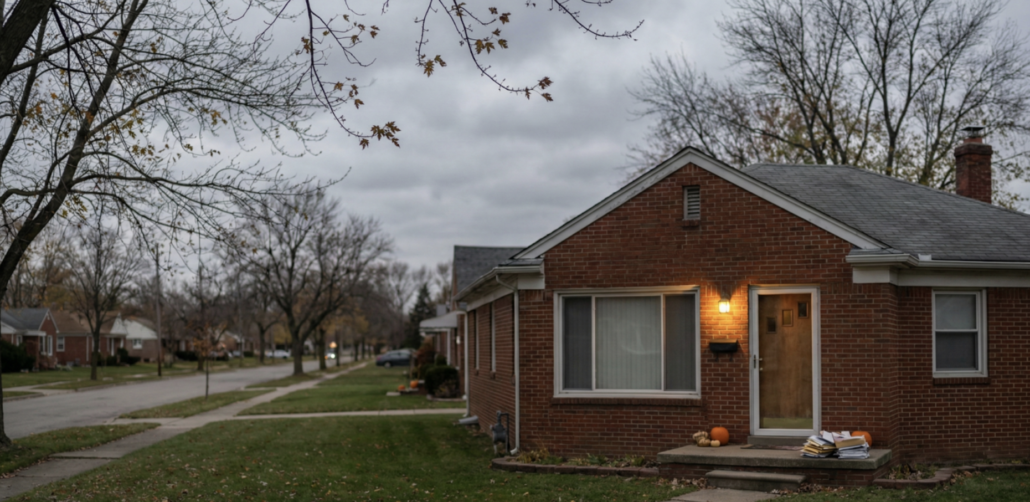
You missed a mortgage payment, and then you missed another. Now, you’re receiving mail at your home in Warren, Royal Oak or Detroit, and it reads less like correspondence and more like a threat.
If you’re staring at a “Notice of Default” or a “Notice of Foreclosure Sale,” your first instinct might be to panic-file for bankruptcy.
In Southeast Michigan, bankruptcy is a powerful tool but not the only tool. In fact, depending on where you are in the timeline, it might not even be the best one.
You’re Behind on Payments — Here’s What’s Actually Happening to Your Home Right Now
Many homeowners believe that once they miss a few payments, the bank will take their home. But, that isn’t true.
In Michigan, the transition from homeowner to evicted is long and bureaucratic.
After a missed payment, your servicer is likely moving through the pre-foreclosure phase, the grey zone where the lender must send you notices but hasn’t yet pulled the trigger on a sale.
Understanding that this is a process and not a sudden event is the first step toward gaining back control.
How Michigan’s Foreclosure Process Works (and How Much Time You Actually Have)
Michigan is a nonjudicial foreclosure state. This means your lender doesn’t have to sue you to take your house. Instead, they can simply foreclose by advertisement under MCL 600.3201.
A notice is published in a local legal newspaper once a week for four consecutive weeks. Then, a Sheriff’s Sale is held.
Even after the Sheriff’s Sale, you still own your home. Under state law, most Michigan homeowners have a six-month statutory redemption period.
During these six months, you don’t have to pay rent or move out, and you have the right to sell the home or refinance to pay off the sale price plus any interest and fees.
The Foreclosure Notice You Got: What It Means and What the Clock Looks Like
There is a massive difference between a Notice of Default and an Acceleration Letter.
A Notice of Default is the lender telling you that you’re late. You can still fix this by paying the arrears.
An Acceleration Letter is the lender “calling” the loan. They are no longer accepting single payments, and they want the entire balance of the mortgage immediately.
Loan Modification: The First Defense Most Homeowners Don’t Pursue Correctly
A loan modification is not a favor the bank does for you. Under federal CFPB Mortgage Servicing Rules (Regulation X), servicers must consider loan modification applications, and cannot proceed with a foreclosure or sale once they’ve received one.
What Lenders Are Actually Required to Offer You in Michigan
An old Michigan law (MCL 600.3205a) required a mandatory “90-day sit-down” meeting with your lender, but that law was repealed years ago. The protections replacing it are actually more robust.
Under federal law, a servicer cannot make the first legal filing or advertisement for foreclosure until you are more than 120 days delinquent, giving you time to submit a loss mitigation application.
By day 36, your servicer is legally required to make live contact with you. By day 45, they must provide a Single Point of Contact (SPOC).
As of early 2026, under the updated Regulation X framework, once you simply request assistance, the servicer must pause the foreclosure clock to evaluate you for all available options.
While the lender isn’t forced to give you a modification, they are required to inform you of your right to work with a HUD-approved housing counselor such as U-SNAP-BAC on Detroit’s East Side or Community Housing Network in Troy.
Why Loan Modification Requests Get Denied — and How to Push Back
The most common reason for denial is actually a missing document. Servicers often claim they never received a page of your bank statement or that your Hardship Letter wasn’t signed.
If the lender denies you, you have a right to appeal. If they try to sell your house while your application is pending, they are violating federal law, and you may have grounds to sue to stop the sale.
Forbearance, Repayment Plans and Resinstatement: Options That Don’t Require an Attorney
If your financial hardship was temporary, such as for a medical emergency or a job gap that has since been resolved, you may not need a full modification.
Forbearance Agreements: What You Can Negotiate Directly with Your Servicer
Forbearance is a pause on payments. While protections under the CARES Act have largely expired, many Fannie Mae and Freddie Mac-backed loans still offer forbearance for those recovering from disasters or temporary layoffs.
It’s important to also note that forbearance is not forgiveness. Those payments will be due at the end of the period, with the balance tacked onto the end of your loan.
Reinstatement Rights in Michigan: Paying the Arrears to Stop the Sale
Under Michigan law, you have a right to reinstate your loan right up until the Sheriff’s Sale. This means paying the total amount you are behind, plus any interest and legal fees.
Always request a written reinstatement quote, as you don’t want to guess on what the total amount owed is.
When the Servicer Won’t Budge: Legal Defenses That Can Slow or Stop Foreclosure
If the lender is refusing to play fair, you can challenge the foreclosure in the circuit court system.
Challenging the Foreclosure on Procedural Grounds in Michigan Courts
Because Michigan foreclosures are nonjudicial, lenders often cut corners. Common defenses include:
- Improper Notice: Did they actually post the notice on your door and publish it for all four weeks in an applicable newspaper?
- Chain of Title Issues: Did the lender actually own the mortgage? In the world of bundled mortgages, assignments are often lost or signed by people without authority.
- Standing: A void foreclosure can be challenged even after the sale if the lender committed a structural defect in the process.
The Quiet Title and Wrongful Foreclosure Playbook in Wayne and Oakland Counties
Filing a Quiet Title action or a wrongful foreclosure lawsuit can stop a sale in its tracks. By filing a lawsuit and recording a Lis Pendens (a legal notice of a pending lawsuit), you cloud the title. No investor will touch a house at a Sheriff’s Sale if there is an active lawsuit challenging the lender’s right to sell it.
Deed in Lieu, Short Sale and Strategic Exit: Protecting What You Can
Sometimes, it just doesn’t make sense to fight to keep your house. If your home is “underwater” or the payments are truly unaffordable, your goal shifts from staying to exiting with dignity.
How a Deed in Lieu of Foreclosure Works — and When It’s Actually the Better Move
Think of this option as “keys for cash,” or at least “keys for no debt.”
You voluntarily give the deed back to the lender. It hurts your credit less than a foreclosure and avoids the public exposure of a Sheriff’s Sale.
Short Sales in Southeast Michigan: What the Local Market Means for Your Negotiating Position
In a short sale, you sell the home for less than you owe, and the lender agrees to take the proceeds. With the Detroit and Macomb markets seeing steady demand, short sales are often approved quickly because the lender would rather have the cash than a vacant property.
That being said, it’s crucial to ensure your short sale agreement includes a deficiency waiver. Without it, the lender could sue you for the gap between the sale price and your debt.
So, Where Does Bankruptcy Actually Fit Into All of This?
Bankruptcy is your emergency break.
The moment you file for Chapter 7 or Chapter 13, an automatic stay is triggered. This legally freezes all foreclosure proceedings, even if the Sheriff’s Sale is scheduled for later today.
The Real Reason Attorneys Recommend Exhausting Non-Bankruptcy Options First
Bankruptcy is not something you should just jump to, though. It stays on your credit for seven to 10 years and can be expensive in terms of legal fees.
If you can achieve a loan modification, your credit will recover much faster, and you won’t be under the supervision of a court trustee for five years.
However, Bankruptcy is the right choice if:
- The Sheriff’s Sale is days away and the bank won’t talk to you.
- You have significant other debt that is preventing you from making mortgage payments.
- You have a steady income but simply need three to five years to catch up on the arrears.
How to Know if You’ve Run Out of Non-Bankruptcy Options (An Honest Checklist)
If you can check more than two of these boxes, it’s time to look at a Chapter 13 filing:
- [ ] Your loan modification was denied and you have exhausted all appeals.
- [ ] You are less than 10 days away from a Sheriff’s Sale.
- [ ] You have equity in the home but can’t afford to reinstate the loan in one lump sum.
- [ ] The servicer is dual-tracking and ignoring your phone calls.
Final Thoughts
In Southeast Michigan, the law provides a surprising amount of breathing room for homeowners. Whether it’s using the six-month redemption period to sell your home in a hot market or filing a procedural challenge, you have options.
At Babi Legal Group, our attorneys have the experience and the expertise to walk you through all your options. Contact us today to learn more.